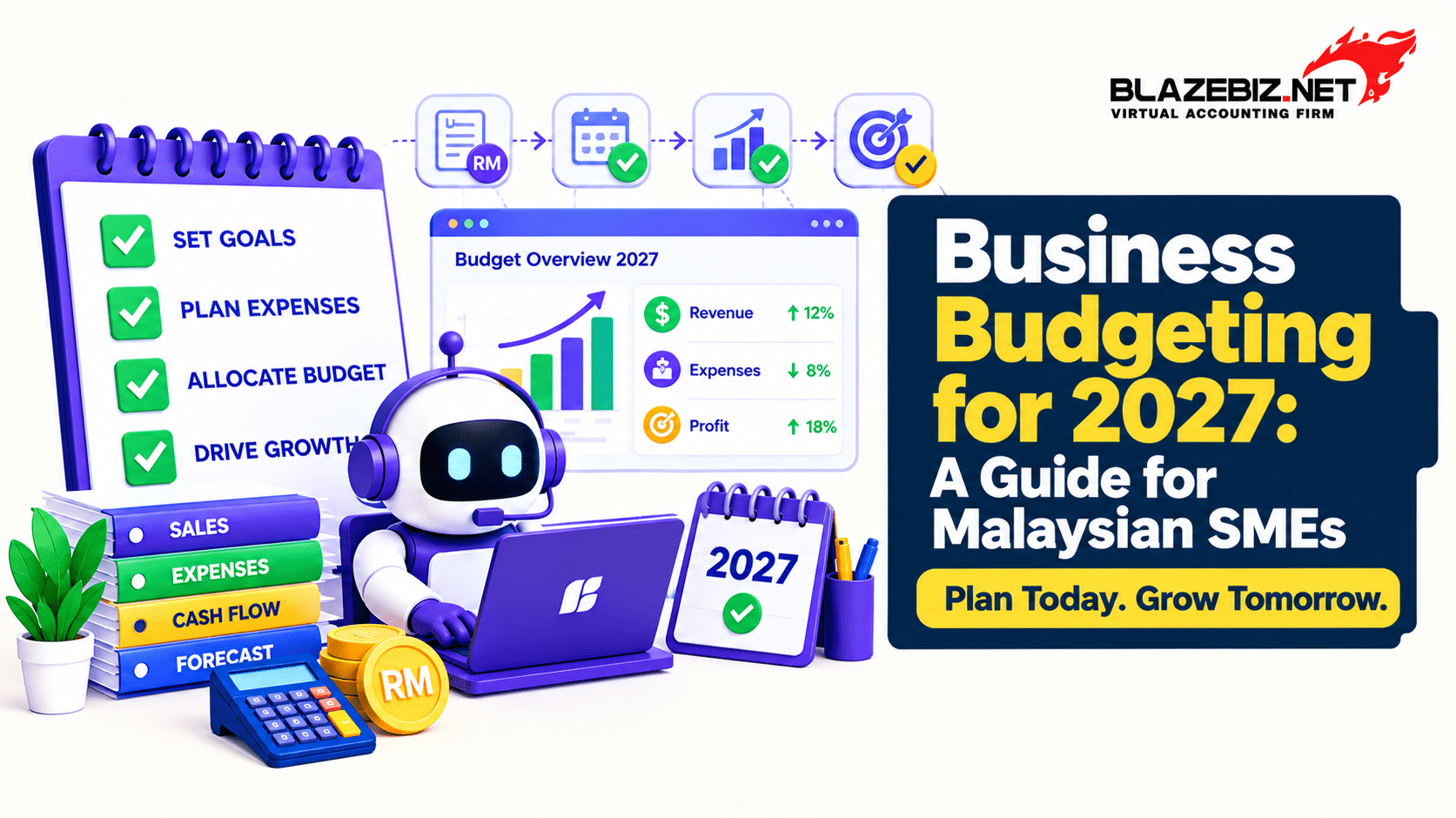
Business Budgeting for 2027: A Guide for Malaysian SMEs
Business Budgeting for 2027: A Guide for Malaysian SMEs
Published Date: October 10, 2026
A new year brings new opportunities for Malaysian small and medium-sized enterprises (SMEs), but growth requires more than ambitious sales targets. Businesses need a clear plan for managing expenses, allocating resources and maintaining sufficient cash to meet their financial commitments.
Business budgeting for 2027 helps business owners turn their goals into practical financial plans. Whether you run a retail shop, trading company, service business or growing enterprise, a well-prepared budget can help you make informed decisions and prepare for unexpected costs.
In this guide, we explain how Malaysian SMEs can prepare a realistic business budget for 2027, monitor performance and use financial information to manage their business more effectively.
What Is a Business Budget?
A business budget is a financial plan that estimates your expected revenue, operating expenses, investments and cash requirements over a specific period. It provides a benchmark for comparing actual business performance against your financial targets.
For Malaysian SMEs, a budget may include sales revenue, salaries, rent, utilities, inventory purchases, marketing expenses, software subscriptions, loan repayments and planned equipment investments.
A good budget should reflect your business’s actual financial position, not just the growth you hope to achieve.
Why Should Malaysian SMEs Prepare a Budget for 2027?
Without a clear budget, businesses may overspend, underestimate working capital requirements or make expansion decisions without understanding the financial impact.
Preparing a budget for 2027 can help you:
Set realistic sales targets: Estimate the revenue needed to support your business goals.
Control operating expenses: Identify unnecessary spending and manage recurring costs.
Plan cash flow: Prepare for supplier payments, payroll, rent, taxes and loan instalments.
Allocate resources: Decide how much to invest in marketing, staffing, technology and inventory.
Prepare for uncertainty: Build financial flexibility for unexpected expenses or slower sales periods.
Measure business performance: Compare actual results with your budget and take corrective action early.
7 Steps to Prepare a Business Budget for 2027
1. Review Your 2026 Financial Performance
Before planning for 2027, review your current financial performance. Examine your sales, gross profit, operating expenses, outstanding customer payments and cash flow to understand where your business stands.
Look for patterns such as seasonal sales changes, rising supplier costs, slow-paying customers and expenses that did not produce the expected results.
Use accurate financial reports instead of relying only on estimates or memory. If your records are scattered across spreadsheets, consider organising them through an accounting system. Read our guide on how to prepare accurate financial reports faster.
2. Forecast Your Revenue for 2027
Estimate how much revenue your business can realistically generate each month in 2027. Consider previous sales, confirmed orders, customer demand, pricing changes, marketing plans and expected business growth.
For example, a business that generated RM600,000 in annual revenue during 2026 may target RM660,000 in 2027. This represents a 10% increase, but the target should be supported by a realistic sales plan and sufficient capacity to deliver the additional business.
Prepare three revenue scenarios where useful:
Conservative: Revenue if sales are slower than expected.
Expected: Revenue based on your most realistic assumptions.
Optimistic: Revenue if new opportunities perform better than planned.
Planning for different outcomes helps you avoid committing to expenses based on an overly ambitious sales forecast.
3. List Your Fixed and Variable Costs
Next, estimate the expenses required to operate your business. Separate fixed costs from variable costs so you can understand which expenses remain relatively stable and which change with sales or production.
Fixed costs may include:
Office, shop or warehouse rent
Permanent staff salaries
Software subscriptions
Insurance premiums
Recurring service contracts
Variable costs may include:
Inventory and raw materials
Packaging and delivery expenses
Sales commissions
Transaction or payment processing fees
Production costs that change with output
Review your previous spending and account for known price increases, planned recruitment, new premises or changes in supplier terms. Avoid simply copying last year’s expenses into the new budget without checking whether they remain accurate.
4. Prepare a Monthly Cash Flow Forecast
A profitable business can still experience cash shortages when customer payments arrive later than supplier bills, salaries or loan instalments fall due. That is why a business budget should include cash flow planning.
Estimate when money will enter and leave your business each month. Include expected customer collections, supplier payments, payroll, rent, tax obligations, financing commitments and planned equipment purchases.
For example, if you expect RM50,000 in customer collections during March but have RM42,000 in payments due, your projected cash surplus before other cash movements is RM8,000. If some customers pay late, however, the cash available may be lower than expected.
Update your forecast regularly and monitor overdue invoices. Our guide on tracking outstanding customer payments explains how businesses can improve collection visibility.
5. Set Spending Limits and Priorities
Once you estimate your revenue and expenses, decide how much your business can allocate to each category. Prioritise spending that supports operations, customer service, compliance and sustainable growth.
Review areas such as:
Marketing: Allocate funds to campaigns and channels with measurable business outcomes.
Staffing: Plan recruitment, training, salaries and other employment-related costs.
Inventory: Maintain sufficient stock without tying up excessive cash in slow-moving products.
Technology: Budget for accounting, payroll, inventory and operational systems that address real business needs.
Contingency: Set aside a reasonable reserve for unexpected repairs, delayed payments or other disruptions.
Review recurring expenses and remove subscriptions or services that no longer provide value. For more ideas, read our guide to business expense management in Malaysia.
6. Plan for Taxes, Compliance and Major Purchases
Your 2027 budget should account for applicable tax obligations, payroll-related contributions, business licences, insurance renewals and other compliance costs relevant to your business.
Review the requirements that apply to your company and confirm relevant deadlines and rates with your accountant or the appropriate Malaysian authorities. Do not assume that last year’s rules or payment amounts will remain unchanged.
If you plan to purchase equipment, open a new branch, upgrade your systems or expand your workforce, estimate the full cost and timing. Consider deposits, installation, maintenance, financing costs and the effect on working capital before committing.
Also review your accounting and e-Invoice processes to ensure your business can maintain the records and workflows required for its applicable obligations. Learn more about e-Invoice solutions for Malaysian businesses.
7. Monitor Your Budget Every Month
A budget is not a document to prepare once and forget. Compare your actual revenue and expenses against your budget every month to understand whether your business is on track.
For each major category, review:
Budgeted amount: What you planned to earn or spend.
Actual amount: What your business earned or spent.
Variance: The difference between your plan and actual results.
Action required: What needs to change, and who is responsible.
For instance, if your marketing expenses exceed the budget but sales remain unchanged, investigate campaign performance before increasing the allocation further. If material costs rise unexpectedly, review pricing, purchasing decisions and supplier agreements.
Monthly reviews help you identify problems early and adjust your plan as business conditions change.
Simple Business Budget Example for 2027
Consider a Malaysian SME preparing a simplified monthly operating budget for 2027. The following figures are illustrative and should be adapted to your business.
Budget Category
Monthly Estimate
Sales revenue
RM55,000
Inventory and direct costs
RM22,000
Staff salaries
RM12,000
Rent and utilities
RM4,000
Marketing
RM2,500
Software and administration
RM1,500
Other operating expenses
RM3,000
Total listed expenses
RM45,000
Estimated balance before other costs
RM10,000
In this example, RM55,000 in revenue less RM45,000 in listed expenses leaves RM10,000 before any additional costs not included in the table, such as applicable taxes, interest, depreciation or other adjustments.
This balance should not automatically be treated as available cash or final net profit. The business must also consider when customers pay, when expenses are due and any non-cash accounting items. A complete budget should reflect the business’s actual circumstances.
Common Business Budgeting Mistakes to Avoid
Even a carefully prepared budget can become unreliable if it is based on unrealistic assumptions or not reviewed regularly. Watch out for these common mistakes:
Overestimating revenue: Setting targets without considering sales history, demand or operational capacity.
Underestimating expenses: Forgetting maintenance, recruitment, compliance, repairs or recurring subscriptions.
Ignoring cash flow: Assuming that recorded sales mean the money has already been collected.
Using outdated records: Building the budget from incomplete or inaccurate financial information.
Failing to review variances: Allowing overspending or revenue shortfalls to continue without corrective action.
Not planning for uncertainty: Leaving no financial flexibility for delayed payments or unexpected costs.
How Accounting Software Can Simplify Business Budgeting
Managing a budget through spreadsheets may work for a small operation, but it becomes more difficult as transactions, suppliers, customers and branches increase. Manual updates can also make it harder to maintain a consistent view of business performance.
An accounting system can help centralise financial records, track income and expenses, manage customer and supplier transactions, and generate reports for budget reviews. More reliable records make it easier to compare actual results with your financial plan.
For Malaysian SMEs looking to improve financial visibility, SQL Accounting can support day-to-day accounting and reporting workflows. The right setup depends on your business size, processes and reporting requirements.
Automation does not replace financial planning. Instead, it can reduce manual work and help business owners access more consistent information when making decisions.
Frequently Asked Questions
1. When should a Malaysian SME prepare its 2027 business budget?
Ideally, begin before the new financial year starts. Review your latest financial results, forecast revenue and expenses, and confirm major commitments. You can then refine the budget as new information becomes available.
2. What should a business budget include?
A business budget should include expected revenue, direct costs, operating expenses, payroll, cash flow, tax and compliance costs, planned investments and a contingency allowance. The exact categories depend on your business model.
3. How often should an SME review its budget?
Review actual performance against the budget at least monthly. Businesses with seasonal sales, tight cash flow or frequent cost changes may benefit from more frequent cash flow reviews.
4. What is the difference between a business budget and a cash flow forecast?
A business budget estimates expected income, expenses and financial performance over a period. A cash flow forecast estimates when money will actually enter and leave the business. Both are important because sales and accounting profit do not always translate into cash available when payments are due.
5. Can accounting software help with business budgeting?
Yes. Accounting software can help maintain financial records, organise transactions and generate reports for budget monitoring. You can use those reports to compare actual results with your plan and make better-informed decisions.
Final Thoughts
Business budgeting for 2027 is an opportunity for Malaysian SMEs to take greater control of their finances and plan for sustainable growth. By reviewing past performance, forecasting revenue, managing costs and monitoring cash flow, you can make more informed decisions throughout the year.
Start with realistic figures, review your results every month and update your plan when business conditions change. With reliable financial records and a practical budget, your business can approach 2027 with greater clarity and confidence.
Looking to simplify your business accounting and financial reporting? Explore BlazeBiz to learn more about accounting solutions for Malaysian businesses.
“`
## FAQ Schema (JSON-LD)
Add this separately using your SEO plugin’s schema feature or an appropriate custom HTML method. Do not add it as visible blog text, and avoid duplicate FAQ schema if your SEO plugin already generates it.
“`html
“`
Simplify your business operations with:
E-Invoice Solutions
SQL Accounting
SQL POS System
SQL Payroll System
Get professional guidance on the right solution for your business.