
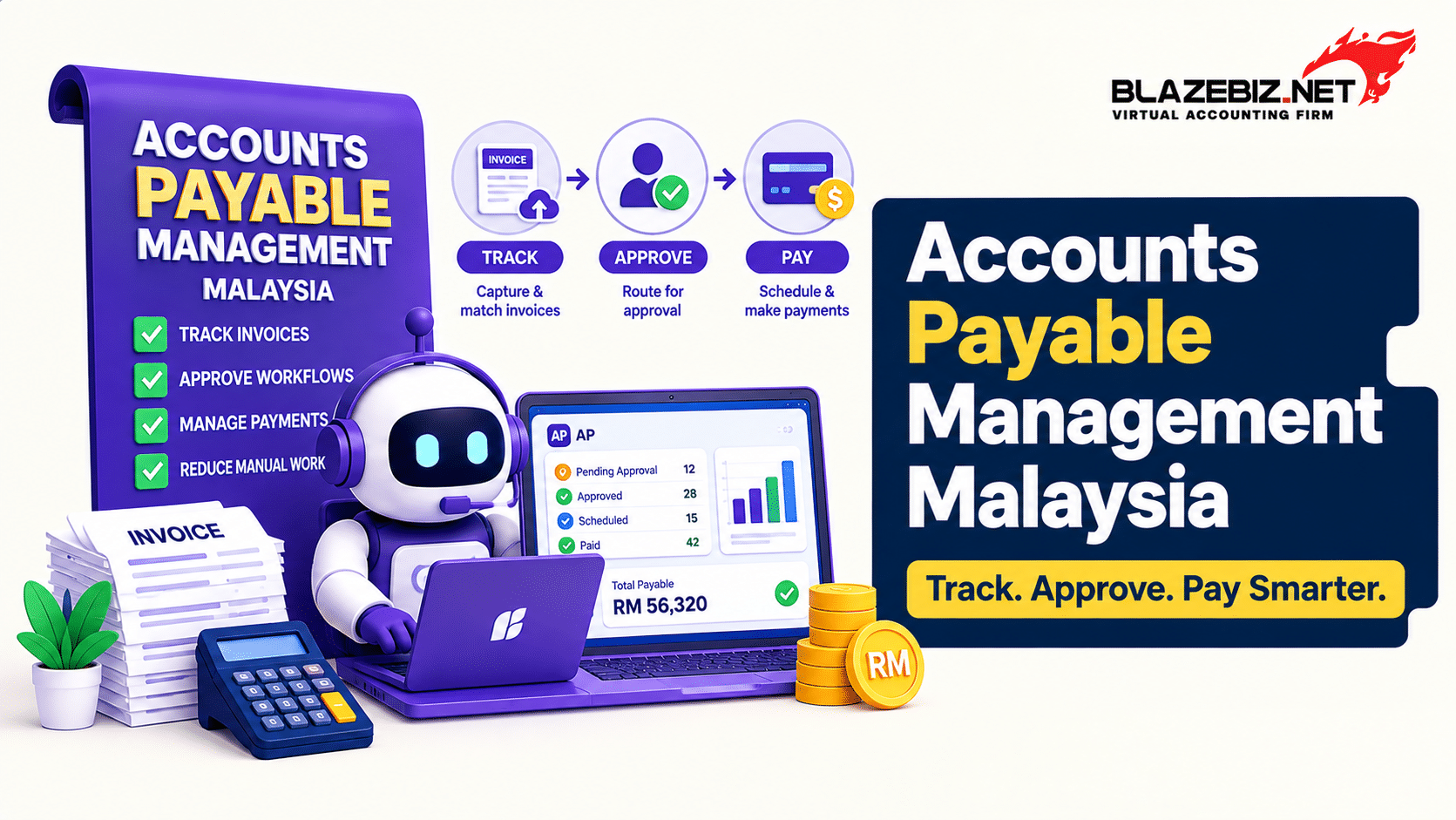
Managing supplier payments is an important part of maintaining healthy business cash flow. For Malaysian SMEs, late payments, duplicate invoices, missing documents and poor visibility of outstanding supplier balances can create unnecessary financial pressure.
Accounts payable management helps businesses keep track of what they owe suppliers, when payments are due and how much cash is required to meet upcoming obligations.
With a structured accounting process and the right accounting software, SMEs can organise supplier invoices, monitor outstanding balances and manage payments more efficiently.
What Is Accounts Payable Management?
Accounts payable refers to the money a business owes its suppliers for goods or services purchased on credit.
Accounts payable management is the process of recording, checking, tracking and paying these supplier obligations accurately and on time.
A typical accounts payable process may include:
- Receiving supplier invoices
- Checking invoice details
- Matching invoices with purchases or delivery records
- Recording supplier bills
- Monitoring payment due dates
- Approving payments
- Making supplier payments
- Recording the payment in the accounting system
- Reviewing outstanding supplier balances
A clear process helps businesses maintain accurate supplier records and avoid unnecessary payment problems.
Why Accounts Payable Matters for Malaysian SMEs
Supplier payments directly affect a company's cash position. Paying too early may reduce available working capital, while paying too late can create supplier relationship problems or disrupt future purchases.
Good accounts payable management gives management better visibility into upcoming financial obligations.
- Outstanding supplier invoices
- Upcoming payment due dates
- Total supplier liabilities
- Supplier payment history
- Available cash for upcoming payments
- Purchasing commitments
This information can also support better cash-flow planning and financial reporting.
Common Accounts Payable Problems for SMEs
As transaction volumes increase, managing supplier payments manually can become more difficult.
1. Missing Supplier Invoices
A supplier invoice may be received by email, WhatsApp, paper document or another channel. If it is not recorded properly, the business may not have an accurate view of its outstanding obligations.
2. Duplicate Invoices
Duplicate invoices can happen when the same document is entered more than once. Without proper controls, this can result in duplicate payments or inaccurate supplier balances.
3. Missed Payment Due Dates
When supplier invoices are tracked through spreadsheets or paper records, it can be difficult to identify which payments are approaching their due dates.
4. Poor Cash-Flow Visibility
If outstanding supplier invoices are not updated regularly, business owners may have difficulty understanding how much cash will be required for upcoming payments.
5. Manual Payment Processing
Preparing supplier payments manually for many vendors can take significant administrative time and increases the need for careful checking.
How to Improve Accounts Payable Management
Malaysian SMEs can improve supplier payment management by creating a consistent process for recording, reviewing and paying invoices.
1. Keep Supplier Information Organised
Maintain accurate supplier records, including supplier name, contact information, payment terms and bank details where applicable.
A centralised supplier database makes it easier for finance teams to find the information they need when processing purchases and payments.
2. Record Supplier Invoices Promptly
Do not wait until the end of the month to enter supplier invoices. Recording invoices promptly gives the business a more accurate view of its outstanding liabilities.
3. Check Invoices Before Payment
Before making a supplier payment, verify important information such as:
- Supplier name
- Invoice number
- Invoice date
- Purchase details
- Quantity and amount
- Applicable taxes
- Payment due date
- Bank account details
The exact checks required will depend on the business's internal controls and purchasing process.
4. Monitor Payment Due Dates
Businesses should regularly review invoices that are due soon, overdue or still awaiting approval.
A simple accounts payable ageing report can help management understand how much is currently payable and how long each balance has been outstanding.
5. Schedule Payments Carefully
Instead of making supplier payments without a clear schedule, businesses can organise payments according to due dates, available cash and agreed supplier terms.
This can help businesses balance supplier obligations with day-to-day working capital requirements.
6. Reconcile Supplier Payments
After payments are made, update the accounting records and check that supplier balances reflect the payment correctly.
This is particularly important when a business manages a large number of supplier transactions.
Accounts Payable Process for Malaysian SMEs
A standard supplier payment workflow can be organised into the following steps:
- Receive the supplier invoice.
- Verify the supplier and invoice details.
- Match the invoice with the relevant purchase or delivery records.
- Record the supplier invoice in the accounting system.
- Check the payment terms and due date.
- Obtain the required approval.
- Schedule the payment.
- Make the supplier payment.
- Record the payment against the supplier account.
- Review the remaining outstanding balance.
Using the same process consistently can make accounts payable easier to monitor and review.
How Accounting Software Can Improve Accounts Payable
Accounting software can provide a centralised environment for managing supplier transactions and financial records.
Instead of maintaining separate spreadsheets for suppliers, invoices and payments, businesses can manage these records within a structured accounting system.
- Centralised supplier records
- Purchase transaction management
- Supplier invoice tracking
- Accounts payable monitoring
- Payment recording
- Supplier statements
- Financial reporting
- Bank and payment-related accounting records
For more information about accounting functionality, see the BlazeBiz SQL Accounting Software page.
How SQL Accounting Can Help Manage Supplier Payments
SQL Accounting provides supplier and purchase management features that can help businesses organise their accounts payable workflow.
Depending on the selected version, modules and configuration, businesses can manage supplier accounts, purchase transactions and payment-related processes within the accounting environment.
SQL Accounting also supports multiple bank accounts for suppliers and can generate e-banking GIRO-related payment information, subject to the applicable setup and banking integration.
For businesses managing many supplier payments, these features can help reduce repetitive administrative work and create a more structured payment process.
Supplier Payment Visibility
Keeping supplier information and purchase transactions within the accounting system can make it easier to review outstanding obligations and payment history.
Bulk Payment Support
For businesses with multiple suppliers, bulk payment functionality can reduce the need to prepare every payment individually. The exact workflow depends on the software configuration and banking setup.
Better Financial Reporting
Supplier liabilities are an important part of understanding a company's overall financial position. Accurate accounts payable records can contribute to more reliable financial reporting.
You can also read our guide on how Malaysian SMEs can prepare accurate financial reports faster.
Accounts Payable vs Accounts Receivable
Accounts payable and accounts receivable represent two different sides of business cash flow.
| Area | Accounts Payable | Accounts Receivable |
|---|---|---|
| Meaning | Money the business owes suppliers | Money customers owe the business |
| Related to | Purchases and supplier invoices | Sales and customer invoices |
| Cash-flow impact | Outgoing cash | Incoming cash |
| Main objective | Manage supplier obligations | Collect customer payments |
| Key monitoring area | Payment due dates | Customer payment due dates |
Both areas should be monitored because they affect the company's working capital and cash-flow position.
For customer collections, see our guide on tracking outstanding customer payments effectively.
Accounts Payable Checklist for Malaysian SMEs
Use this checklist to review your supplier payment process:
- Are all supplier invoices recorded?
- Are supplier records accurate and up to date?
- Are duplicate invoices checked?
- Are invoices matched with purchase or delivery records where required?
- Are payment due dates monitored?
- Are supplier payments approved according to internal controls?
- Are supplier payments recorded promptly?
- Are outstanding supplier balances reviewed regularly?
- Are bank and payment records reconciled?
- Can management easily see upcoming supplier obligations?
How Often Should SMEs Review Accounts Payable?
The review frequency depends on transaction volume and business requirements.
Businesses with frequent purchases and many suppliers may benefit from reviewing accounts payable regularly throughout the week. Smaller businesses may use a weekly or other suitable review schedule.
The important point is to avoid allowing supplier invoices to accumulate without review.
A regular process helps businesses identify upcoming payments, overdue invoices, unusual balances and potential cash-flow pressure earlier.
Can Accounts Payable Automation Reduce Manual Work?
Yes. Depending on the accounting system, automation can reduce repetitive work involved in recording purchases, tracking supplier balances, preparing payment information and maintaining financial records.
However, automation should work alongside appropriate approval and financial controls.
Businesses should still review important transactions, supplier details and payment information before money is transferred.
How Accounts Payable Supports Better Cash-Flow Management
Accounts payable is closely connected to working capital because supplier invoices represent future cash outflows.
When businesses know what they owe and when payments are due, management can plan available cash more effectively.
For example, management can review:
- Total supplier balances
- Payments due this week
- Payments due later in the month
- Overdue supplier invoices
- Large upcoming purchases
- Available cash balances
- Expected customer collections
Combining accounts payable information with accounts receivable and bank information can provide a more complete view of short-term cash requirements.
Frequently Asked Questions
What is accounts payable?
Accounts payable is the amount a business owes suppliers for goods or services purchased on credit.
Why is accounts payable important for SMEs?
Accounts payable helps businesses track supplier obligations, manage payment due dates and understand upcoming cash outflows.
How can SMEs manage supplier payments better?
SMEs can improve supplier payment management by keeping accurate supplier records, recording invoices promptly, checking invoices before payment, monitoring due dates and reviewing outstanding balances regularly.
Can accounting software manage accounts payable?
Yes. Accounting software can provide tools for managing supplier records, purchases, invoices, accounts payable and payment-related transactions. Available features depend on the software, version and configuration.
Can SQL Accounting help with supplier payments?
SQL Accounting provides supplier, purchase and payment-related accounting functions. Its supplier module also supports multiple supplier bank accounts and bulk interbank GIRO payment workflows, subject to the applicable configuration and banking integration.
How often should accounts payable be reviewed?
The appropriate frequency depends on transaction volume and business requirements. Businesses with frequent supplier transactions may benefit from regular weekly or more frequent reviews.
Does accounts payable affect cash flow?
Yes. Supplier invoices represent future cash outflows. Monitoring accounts payable helps businesses understand upcoming payment obligations and plan working capital more effectively.
Improve Accounts Payable Management with BlazeBiz
Managing supplier payments through spreadsheets and disconnected records can become increasingly difficult as a business grows.
A structured accounts payable process can help Malaysian SMEs keep supplier information organised, monitor payment obligations and improve financial visibility.
BlazeBiz provides SQL Accounting solutions for Malaysian businesses, with accounting, supplier, purchase, inventory and financial reporting capabilities that can be configured according to business requirements.
If your business is spending too much time tracking supplier invoices and payments manually, it may be worth reviewing your current accounting workflow.
Explore SQL Accounting with BlazeBiz and build a more organised supplier payment process.
