
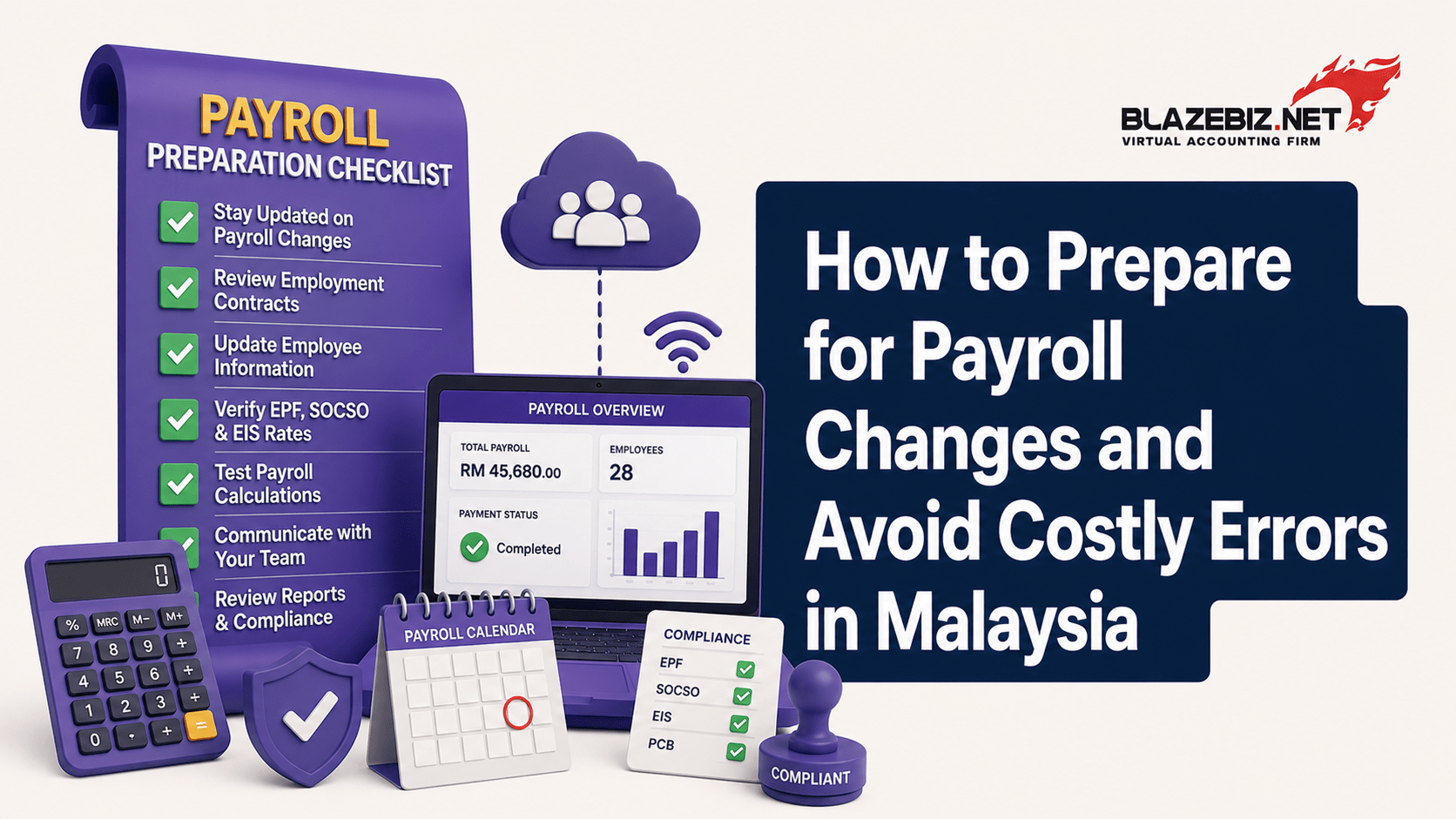
Payroll is more than simply calculating employee salaries.
For Malaysian businesses, payroll teams also need to manage statutory contributions, tax deductions, employee records, payslips and changing regulatory requirements.
As a business grows, handling these tasks manually can increase the risk of incorrect calculations, missed updates and payroll delays.
The good news is that businesses can reduce these risks by combining proper payroll processes with reliable payroll software.
Key Takeaways
Payroll requirements can change, so businesses should regularly review their processes.
Accurate employee records are essential for correct payroll calculations.
Manual payroll processes can increase the risk of errors.
Regular payroll reviews can help identify discrepancies early.
Payroll software can automate repetitive calculations and improve payroll efficiency.
Malaysian SMEs should choose payroll software that supports their statutory and reporting requirements.
1. Keep Up With Payroll and Regulatory Changes
Payroll requirements can change over time.
Businesses need to monitor updates that may affect areas such as:
- SOCSO/PERKESO
- EIS
- PCB/MTD
- Minimum wage
- Tax requirements
- Employment-related requirements
- Payroll reporting
Relying on outdated spreadsheets or manually maintained calculation formulas can make it harder to keep up with changes.
A better approach is to establish a regular process for reviewing payroll requirements and ensuring your payroll system is updated accordingly.
2. Keep Employee Information Accurate
Accurate employee data is the foundation of accurate payroll.
Before processing monthly salaries, businesses should regularly review:
- Employee salary
- Allowances
- Overtime
- Employee status
- Bank details
- Tax information
- EPF information
- SOCSO and EIS details
- Leave records
- Even a small error in employee information can affect salary calculations or statutory deductions.
As the workforce grows, managing this information through multiple spreadsheets can become increasingly difficult.
3. Reduce Manual Payroll Calculations
Manual calculations create unnecessary opportunities for mistakes.
For example, payroll staff may need to calculate salary, overtime, allowances and statutory deductions separately before preparing payslips.
This becomes more challenging when a company has dozens or hundreds of employees.
Payroll software can automate many repetitive calculations and standardise the monthly payroll process.
This allows HR and finance teams to spend less time checking formulas and more time reviewing exceptions.
4. Standardise Your Payroll Process
A consistent payroll workflow helps reduce errors.
A typical monthly process could include:
Employee Data Review → Attendance & Leave → Payroll Calculation → Statutory Deductions → Payroll Review → Payslips → Reports
Each stage should have a responsible person and appropriate review or approval process.
Standardisation is particularly important when multiple employees are involved in payroll administration.
5. Review Payroll Before Finalising It
Automation does not mean businesses should stop reviewing payroll.
- Before finalising monthly payroll, check for:
- Unusual salary changes
- Missing employees
- Incorrect deductions
- Overtime differences
- New employees
- Resigned employees
- Unusual allowances
- Statutory contribution differences
A short review can help identify errors before payslips and payments are processed.
6. Maintain Proper Payroll Records
Good payroll records help businesses respond to employee questions, internal reviews and compliance requirements.
Instead of storing information across different spreadsheets and folders, businesses can use a centralised payroll system to organise employee and payroll information.
This can make it easier to retrieve historical payslips, payroll reports and employee records when required.
7. Use Payroll Software to Reduce Human Error
As your business grows, manual payroll becomes increasingly difficult to manage efficiently.
Payroll software can help automate repetitive processes and improve consistency.
For Malaysian SMEs, useful features may include:
- Automated payroll calculations
- EPF/KWSP support
- SOCSO/PERKESO calculations
- EIS calculations
- PCB/MTD calculations
- Payslip generation
- Payroll reports
- Employee records
- Leave management
- Statutory reporting
The exact features and supported requirements depend on the software and configuration, so businesses should confirm the latest capabilities before implementation.
How SQL Payroll Can Help Malaysian Businesses
SQL Payroll is designed to help businesses streamline payroll processing and manage employee payroll information.
According to BlazeBiz, SQL Payroll supports calculations for areas including KWSP, SOCSO, PCB and EIS, while its SQL e-Leave mobile application allows employees to apply for leave and access payslip information.
For growing businesses, having payroll, employee information and related processes organised within one system can reduce repetitive administrative work.
What Can Go Wrong With Manual Payroll?
Businesses relying heavily on spreadsheets may experience:
- Incorrect calculations
- Duplicate data entry
- Outdated formulas
- Missing employee information
- Payroll processing delays
- Difficulty tracking changes
- More time spent checking payroll
These problems may become more common as employee numbers increase.
The objective of payroll automation is therefore not simply to make payroll faster.
It is to create a more consistent, manageable and reliable payroll process.
Frequently Asked Questions
How can Malaysian businesses reduce payroll errors?
Businesses can reduce payroll errors by keeping employee information updated, standardising payroll procedures, reviewing calculations and using payroll software to automate repetitive tasks.
What should payroll software support in Malaysia?
Depending on the business, important requirements may include EPF/KWSP, SOCSO/PERKESO, EIS, PCB/MTD, payslip generation, payroll reporting and employee record management.
Is Excel suitable for payroll?
Excel can work for very small businesses with simple payroll requirements. However, as employee numbers and payroll complexity increase, dedicated payroll software can provide better automation and control.
How often should businesses review their payroll process?
Payroll processes should be reviewed regularly, especially when there are changes to statutory requirements, employee numbers, salary structures or business operations.
- Can SQL Payroll automate statutory calculations?
SQL Payroll supports payroll processing and statutory calculations including KWSP, SOCSO, EIS and PCB, subject to the applicable software version and configuration.
Prepare Your Payroll for Business Growth
Payroll becomes more complex as your workforce grows.
Instead of waiting for a payroll error or regulatory change to expose weaknesses in your process, businesses can take a proactive approach by reviewing their payroll workflow, keeping employee information accurate and using appropriate payroll technology.
BlazeBiz provides SQL Payroll solutions for Malaysian businesses looking to simplify payroll processing and reduce manual administrative work.
If your current payroll process relies heavily on Excel or manual calculations, it may be time to review your system.
Talk to BlazeBiz about SQL Payroll and find a payroll solution that fits your business
