
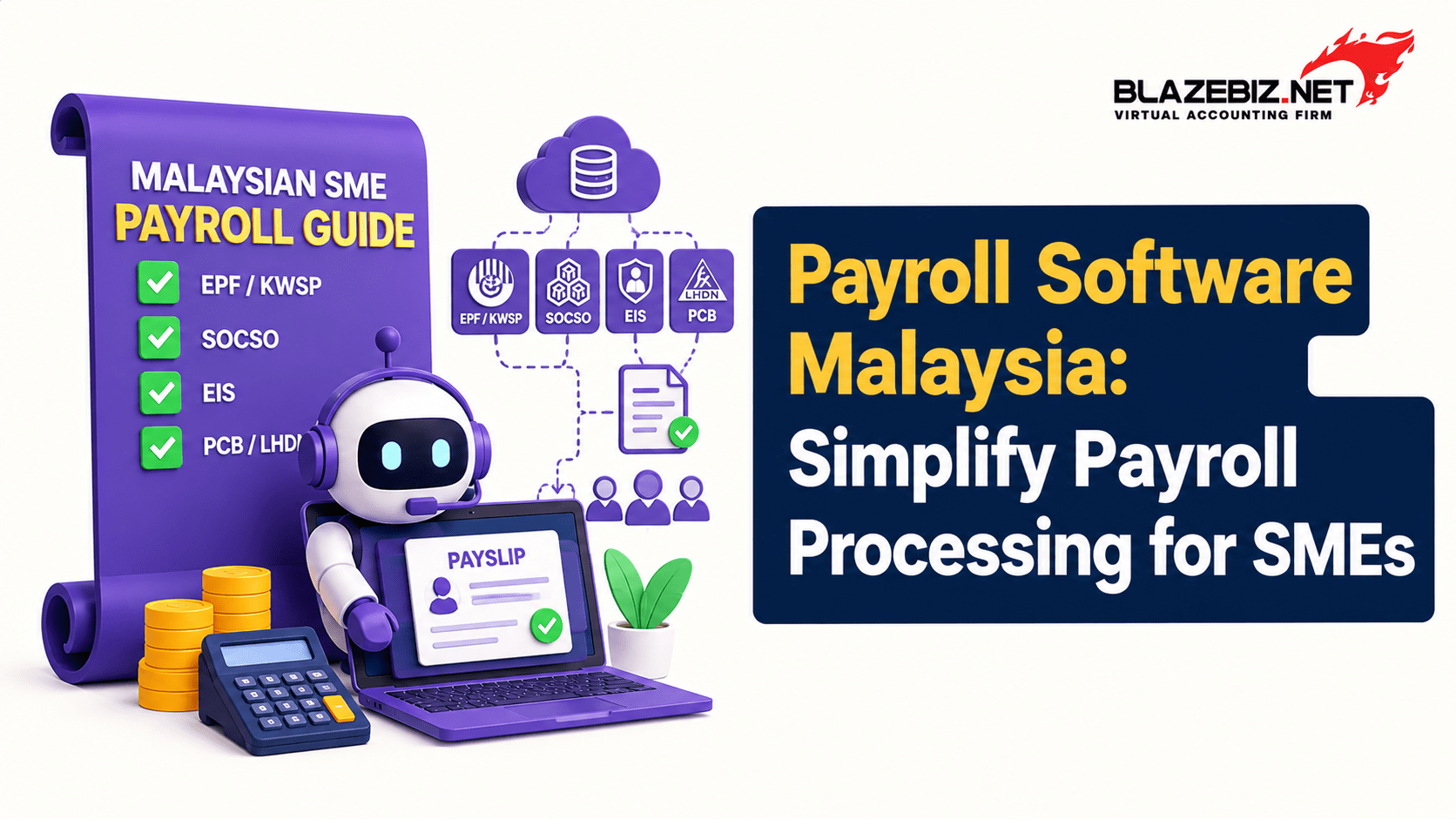
How to Simplify Payroll Processing for Malaysian SMEs
Managing payroll can become increasingly complicated as a business grows. What starts as a simple monthly task can quickly turn into hours of calculations, checking employee information, preparing payslips, handling statutory contributions and making sure everything is processed correctly and on time.
For Malaysian SMEs, payroll processing also involves keeping up with requirements such as EPF, SOCSO, EIS and PCB/MTD, while maintaining accurate employee and salary records.
The good news is that payroll does not have to be a time-consuming manual process.
With the right payroll software in Malaysia, SMEs can automate repetitive tasks, reduce manual errors and make monthly payroll processing more efficient.
In this guide, we explore the common challenges Malaysian businesses face with payroll and how payroll software such as SQL Payroll can help simplify the process.
Why Is Payroll Processing Challenging for Malaysian SMEs?
Payroll involves more than simply calculating an employee’s monthly salary.
A typical payroll cycle may involve:
- Recording employee attendance and working information
- Calculating basic salary
- Processing overtime and allowances
- Managing deductions
- Calculating statutory contributions
- Preparing payslips
- Processing payroll reports
- Maintaining employee records
- Keeping payroll information organised
- Ensuring employees are paid accurately and on time
When these tasks are handled manually using spreadsheets or disconnected systems, the risk of errors increases.
As the number of employees grows, payroll administration can become even more difficult.
7 Common Payroll Problems Faced by SMEs
1. Too Much Manual Data Entry
Entering employee salary information, allowances, deductions and other payroll details manually every month takes time.
It can also result in duplicate entries or incorrect information.
A payroll system can centralise employee information and reduce repetitive data entry.
2. Payroll Calculations Can Become Complicated
Salary calculations may involve overtime, allowances, deductions, unpaid leave and other payroll components.
Manually calculating every component increases the amount of checking required by HR and finance teams.
Payroll software can automate many of these calculations based on the information stored in the system.
3. Statutory Contributions Require Accuracy
Malaysian employers need to manage statutory payroll requirements, including:
- EPF
- SOCSO
- EIS
- PCB/MTD
Keeping track of the relevant calculations and records manually can create additional administrative work.
A suitable Malaysia payroll software can help automate payroll calculations and generate the necessary payroll information and reports.
4. Preparing Payslips Takes Time
Creating individual payslips manually every month can become a repetitive task.
Digital payroll systems can generate payslips based on processed payroll data, making distribution easier and reducing administrative work.
5. Payroll Data Is Spread Across Different Files
Some businesses manage employee information, attendance, payroll calculations and financial records in separate spreadsheets.
This can make it difficult to get a clear view of payroll information.
A centralised payroll management system can help bring employee and payroll information together in one place.
6. Payroll Errors Can Affect Employee Trust
Even a small payroll error can create unnecessary questions from employees.
Incorrect salary amounts, missing allowances or inaccurate deductions can require additional time to investigate and correct.
Automating repetitive payroll calculations can help reduce the risk of avoidable manual errors.
7. Payroll Takes Too Much Time Every Month
For many SMEs, payroll becomes a recurring administrative burden.
Instead of spending hours checking spreadsheets and calculating payroll manually, businesses can use software to automate routine processes and allow HR and finance teams to focus on more important activities.
How Payroll Software Can Simplify Payroll Processing
The right payroll software can transform payroll from a largely manual process into a more structured and automated workflow.
Here are some of the key benefits.
1. Centralise Employee Information
Instead of maintaining multiple spreadsheets, employee information can be managed within a dedicated payroll system.
This makes it easier to maintain organised records and access payroll information when required.
2. Automate Payroll Calculations
Payroll software can automate many routine calculations involved in monthly payroll processing.
This can reduce repetitive manual work and help improve calculation consistency.
3. Manage Statutory Payroll Requirements
For Malaysian businesses, payroll software can help manage payroll information related to statutory contributions and deductions.
This reduces the need to perform every calculation manually.
4. Generate Payslips Faster
Once payroll has been processed, payslips can be generated from the payroll system.
This makes the monthly payroll process more efficient and reduces the need for manual document preparation.
5. Reduce Spreadsheet Dependency
Excel remains useful for many business tasks, but relying heavily on spreadsheets for payroll can become difficult as the business grows.
Dedicated payroll software provides a structured environment specifically designed for payroll management.
6. Improve Payroll Record Management
A centralised system makes it easier for authorised users to access payroll information, reports and employee records.
This can make payroll administration more organised and easier to manage.
7. Save Administrative Time
Perhaps the biggest advantage is reducing repetitive payroll work.
When routine tasks are automated, HR and finance teams can spend less time preparing payroll and more time supporting the wider business.
SQL Payroll: A Payroll Solution for Malaysian SMEs
For businesses looking for a more structured approach to payroll management, SQL Payroll provides tools designed to help businesses manage their payroll processes more efficiently.
Businesses can use payroll software to manage employee information, salary calculations, statutory payroll requirements, payslips and payroll reporting from a centralised system.
For SMEs, this can help replace fragmented manual processes with a more organised payroll workflow.
Who Can Benefit from Payroll Software?
Payroll software can be useful for a wide range of Malaysian businesses, including:
- Small and medium-sized enterprises
- Growing companies
- Retail businesses
- Manufacturing companies
- Professional service businesses
- Trading and distribution companies
- Multi-employee organisations
- Businesses with dedicated HR or finance teams
You don’t necessarily need hundreds of employees to benefit from payroll automation.
Even a small business can benefit when payroll tasks start taking too much time each month.
When Should Your SME Invest in Payroll Software?
There are several signs that your business may be ready to move away from manual payroll processing.
Consider payroll software if:
- Your payroll is still managed primarily through Excel
- Payroll takes several hours every month
- Your employee numbers are growing
- HR and finance teams repeatedly enter the same information
- You manually prepare employee payslips
- Payroll calculations require extensive checking
- You find it difficult to maintain payroll records
- You want to reduce repetitive administrative work
If several of these situations sound familiar, it may be time to consider a dedicated payroll management system.
How to Choose Payroll Software in Malaysia
Before selecting a payroll system, SMEs should consider more than just the software price.
Malaysian Payroll Support
The software should be designed to support the payroll requirements relevant to Malaysian businesses.
Statutory Payroll Management
Check whether the system supports the statutory calculations and reports your business needs.
Easy Payroll Processing
The system should simplify, rather than complicate, your monthly payroll workflow.
Payslip Generation
Digital payslip generation can help reduce manual administrative work.
Payroll Reports
Good reporting capabilities can make it easier for HR and finance teams to review payroll information.
Scalability
Choose software that can continue supporting your business as your employee count grows.
Support and Training
Implementation, training and ongoing support can be just as important as the software itself.
Manual Payroll vs Payroll Software
| Payroll Process | Manual / Excel | Payroll Software |
|---|---|---|
| Employee records | Manually maintained | Centralised |
| Salary calculations | Manual | Automated |
| Statutory calculations | More manual work | System-assisted |
| Payslips | Manual preparation | Generated digitally |
| Payroll reports | Manual preparation | System-generated |
| Data entry | Repetitive | Reduced |
| Error checking | More manual checking | More structured |
| Scalability | Becomes harder as business grows | Designed to support growth |
The goal isn’t simply to replace Excel.
The goal is to create a more efficient, consistent and manageable payroll process.
5 Steps to Simplify Payroll in Your SME
If you are still managing payroll manually, you don’t have to change everything overnight.
Step 1: Review Your Current Payroll Process
Document how your business currently manages employee information, salary calculations, statutory contributions and payslips.
Step 2: Identify Repetitive Tasks
Find the tasks that consume the most time every month. These are usually the best candidates for automation.
Step 3: Standardise Employee Information
Make sure employee information is accurate and consistently maintained.
Step 4: Evaluate Payroll Software
Compare payroll systems based on features, Malaysian payroll requirements, ease of use, scalability and support.
Step 5: Automate Gradually
Start by automating the most repetitive payroll tasks and expand your use of the system as your team becomes familiar with it.
Frequently Asked Questions About Payroll Software in Malaysia
What is payroll software?
Payroll software is a system that helps businesses manage employee payroll processes, including salary calculations, deductions, statutory contributions, payslips and payroll reporting.
Is payroll software suitable for small businesses?
Yes. Small businesses can benefit from payroll software when manual payroll processing starts consuming significant time or becomes difficult to manage.
Can payroll software calculate EPF, SOCSO and EIS?
Payroll systems designed for Malaysian businesses can support relevant statutory payroll calculations. Businesses should verify the specific statutory features and current compliance support provided by the software they choose.
Is payroll software better than Excel?
Excel can work for simple payroll requirements, but dedicated payroll software can provide greater automation, structured employee records, payroll calculations, reporting and scalability.
How much does payroll software cost in Malaysia?
Pricing varies depending on the software, number of employees, modules, implementation requirements and support package. Businesses should compare the total cost against the time and administrative work they currently spend on payroll.
Make Payroll Easier with SQL Payroll
Payroll should not take up more time than necessary.
As your business grows, managing payroll through spreadsheets and manual processes can become increasingly difficult. A dedicated payroll software solution can help automate routine tasks, organise employee information, simplify payroll processing and reduce administrative workload.
With the right system in place, your HR and finance teams can spend less time on repetitive payroll administration and more time focusing on the business.
Ready to Simplify Your Payroll?
Looking for reliable payroll software in Malaysia for your SME?
Explore SQL Payroll and discover how a structured payroll management system can simplify your monthly payroll process.
Ready to streamline your payroll? Contact BlazeBiz today to learn more about SQL Payroll and find a solution that fits your business.
