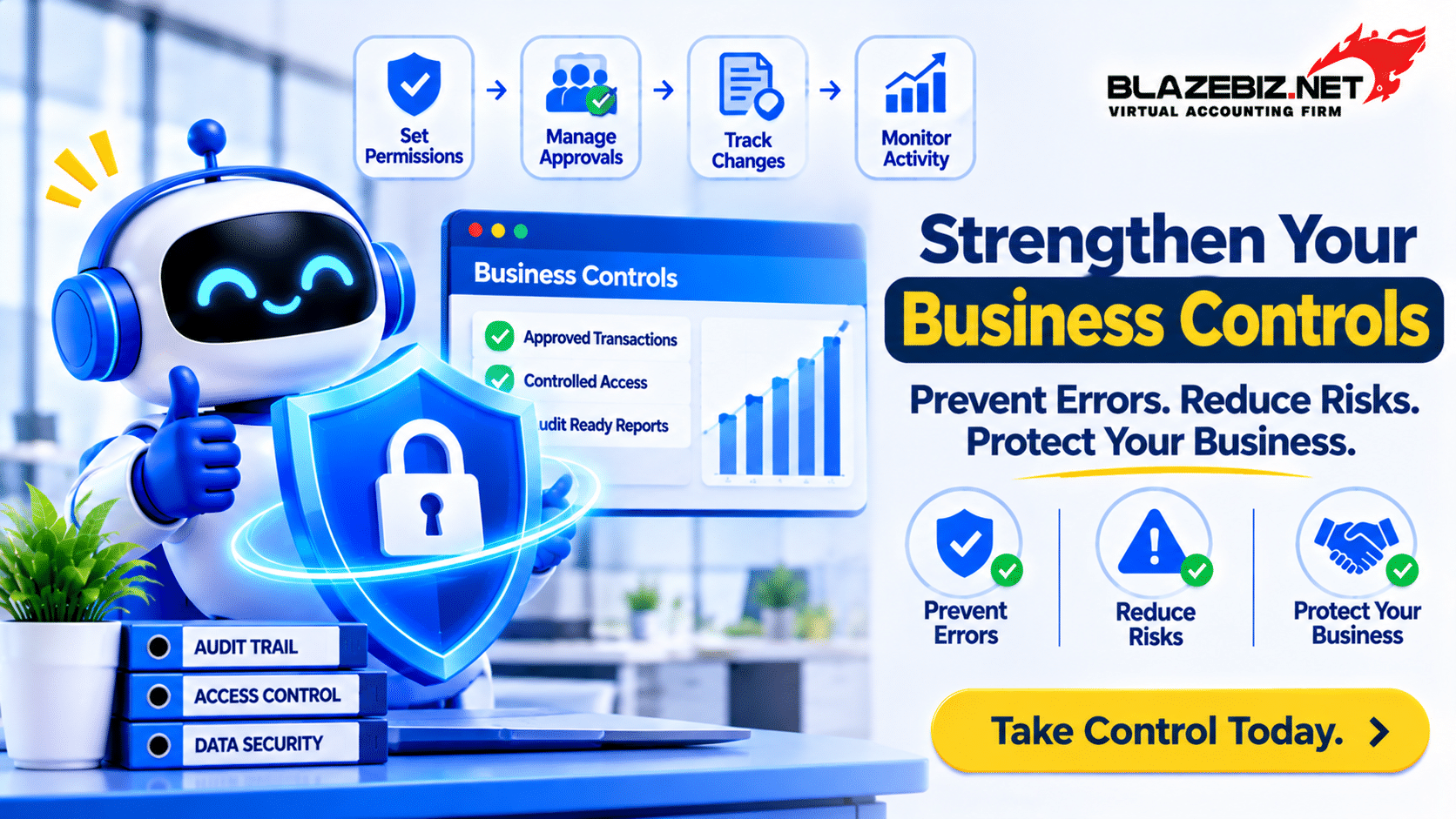
Running a successful business involves more than generating sales and managing expenses. Business owners also need to make sure that money, inventory, financial records and daily operations are properly controlled.
For Malaysian small and medium-sized enterprises (SMEs), weak internal controls can create serious problems. Unauthorised payments, inaccurate accounting records, missing inventory and undetected errors can affect profitability and damage business confidence.
Internal controls help businesses establish clear procedures, assign responsibilities and monitor important activities. They do not need to be complicated or expensive. Even small businesses can introduce practical controls that reduce risks and improve accountability.
This guide explains what internal controls are, why they matter and how Malaysian SMEs can strengthen their financial and operational processes.
What Are Internal Controls?
Internal controls are the policies, procedures and activities a business uses to manage risks, protect assets, maintain accurate records and support reliable operations.
They help ensure that business activities are properly authorised, recorded and reviewed. They also make it easier to identify unusual transactions, prevent avoidable mistakes and investigate problems when they occur.
Examples of internal controls include:
- Requiring approval before making large purchases.
- Checking supplier invoices against purchase orders and delivery records.
- Separating payment preparation from payment approval.
- Conducting regular inventory counts.
- Reconciling bank statements with accounting records.
- Restricting access to sensitive financial information.
- Reviewing financial reports regularly.
These procedures create a more organised working environment and reduce the possibility of errors, misuse of company resources and unauthorised activities.
Why Internal Controls Matter for Malaysian SMEs
Many SMEs operate with small teams where employees handle several responsibilities. Although this can make daily operations more flexible, it may also increase the risk of mistakes and reduce oversight.
Establishing appropriate internal controls helps businesses manage these risks while supporting more consistent operations.
1. Protects Business Assets
Cash, inventory, equipment and business information are valuable assets. Without proper controls, these resources may be lost, damaged, misused or accessed without permission.
Businesses can reduce these risks by limiting access, maintaining accurate records and conducting regular checks.
2. Reduces Financial Errors
Incorrect invoice entries, duplicate payments, missing transactions and calculation mistakes can affect financial records. Review and approval procedures help identify errors before they create larger problems.
3. Helps Prevent Fraud
Weak oversight can create opportunities for unauthorised payments, false expense claims and misuse of company funds. Clear approval limits and independent reviews make suspicious activities more difficult to conceal.
4. Improves Financial Accuracy
Reliable financial information is essential for business planning and decision-making. Internal controls help ensure that transactions are recorded correctly and that financial reports are reviewed for unusual differences.
5. Strengthens Employee Accountability
When employees understand their responsibilities and approval limits, daily tasks become easier to manage. Clear procedures also help business owners identify who is responsible for each activity.
6. Supports Business Growth
As a business grows, transaction volumes and operational responsibilities increase. Controls that are introduced early can provide a stronger foundation for managing additional employees, suppliers, customers and business locations.
Common Internal Control Weaknesses in SMEs
Some businesses rely heavily on trust and informal communication instead of documented procedures. While this may appear convenient, it can create weaknesses that become more difficult to manage as the business expands.
1. One Employee Handles Every Financial Task
When one employee can create suppliers, prepare payments, approve transactions and update accounting records without independent review, mistakes or inappropriate transactions may go undetected.
2. No Clear Approval Process
Purchases and payments made without defined approval limits can result in unnecessary spending, unauthorised commitments and difficulty tracking who approved a transaction.
3. Incomplete Financial Records
Missing receipts, unrecorded expenses and incomplete supporting documents make it difficult to verify transactions and maintain accurate accounts.
4. Irregular Bank Reconciliation
When bank accounts are not reconciled regularly, businesses may fail to identify duplicate payments, bank charges, unauthorised transactions or recording errors promptly.
5. Poor Inventory Monitoring
Without regular stock counts and proper movement records, inventory discrepancies may remain unnoticed. This can lead to inaccurate stock balances, unexpected shortages and financial losses.
6. Shared Passwords and Unrestricted System Access
When employees share login credentials or have access to information beyond their responsibilities, businesses may struggle to identify who made a change or accessed sensitive records.
8 Essential Internal Controls Every SME Should Implement
Internal controls should reflect the size, structure and risks of each business. The following practices provide a practical starting point for Malaysian SMEs.
1. Establish Clear Financial Approval Limits
Set approval limits for purchases, expenses, supplier payments and other financial commitments. Employees should understand which transactions they can approve and which require management approval.
For example, a business may require department manager approval for routine purchases and director approval for larger commitments. The actual limits should reflect the company’s size, financial position and risk exposure.
Document the approval structure and review it whenever business responsibilities change.
2. Separate Important Financial Responsibilities
Segregation of duties means dividing important tasks among different people so that no single employee controls an entire transaction from beginning to end.
For example:
- One employee prepares a supplier payment.
- A different authorised person reviews and approves it.
- Another employee or reviewer checks the transaction against the supporting documents and accounting records.
Small businesses may not have enough employees to separate every responsibility. In that situation, an owner or manager can provide independent review of important transactions and regularly examine supporting documents.
3. Control Purchasing and Supplier Payments
Purchasing and supplier payments are important areas where businesses should establish clear procedures.
Before processing a supplier payment, check the relevant documents:
- Purchase order: Confirms that the purchase was authorised.
- Delivery order or goods received record: Confirms that the goods or services were received.
- Supplier invoice: Confirms the amount charged by the supplier.
Comparing these documents helps identify incorrect quantities, unexpected charges and duplicate invoices before payment is made.
Businesses should also verify supplier bank account changes through an independent communication channel before updating payment details.
4. Perform Regular Bank Reconciliation
Bank reconciliation compares the transactions recorded in the accounting system with the transactions shown in the bank statement.
It helps businesses identify:
- Unrecorded bank charges and interest.
- Duplicate or missing transactions.
- Payments that have not cleared.
- Unexpected deposits or withdrawals.
- Possible unauthorised transactions.
SMEs should reconcile their bank accounts regularly, ideally every month. Important differences should be investigated and resolved rather than carried forward without explanation.
5. Monitor Cash and Petty Cash
Cash transactions require proper documentation because physical cash can be difficult to trace once it has been used.
Businesses can strengthen cash controls by:
- Setting a petty cash limit.
- Requiring receipts for cash expenses.
- Recording every cash payment.
- Restricting access to the cash float.
- Conducting periodic cash counts.
- Reviewing and approving petty cash replenishment.
These measures help ensure that cash balances are properly supported and that small expenses do not become an uncontrolled source of financial leakage.
6. Protect Inventory and Business Assets
Inventory, equipment and other business assets should be recorded and monitored. Businesses should maintain clear procedures for receiving, issuing, transferring and disposing of assets.
Useful controls include:
- Recording all inventory movements.
- Restricting access to storage areas.
- Conducting regular physical stock counts.
- Investigating differences between actual and recorded stock.
- Maintaining an asset register for important equipment.
- Documenting asset transfers and disposals.
Regular monitoring helps businesses identify missing items, damaged inventory and assets that are no longer being used effectively.
7. Restrict Access to Financial Systems
Accounting systems and financial documents often contain confidential business information. Access should be limited according to each employee’s responsibilities.
SMEs should consider the following practices:
- Give employees individual login accounts.
- Avoid sharing passwords.
- Use role-based access permissions where available.
- Enable multi-factor authentication where supported.
- Remove or update access when employees leave or change roles.
- Review important changes to financial records.
- Back up important business information regularly.
These controls help reduce unauthorised access and make it easier to identify changes made to important records.

Our Business is to
Simplify Yours
Our Business is to Simplify Yours
We stress very much on customer service and support – we understand that end-users need their queries attended to in a timely manner, and so we place a high level of resources to ensure you get the assistance you demand for in our company.

Explore
© All rights reserved. • Blazebiz Innovate Sdn Bhd | 202101032194 (1432494-V)