
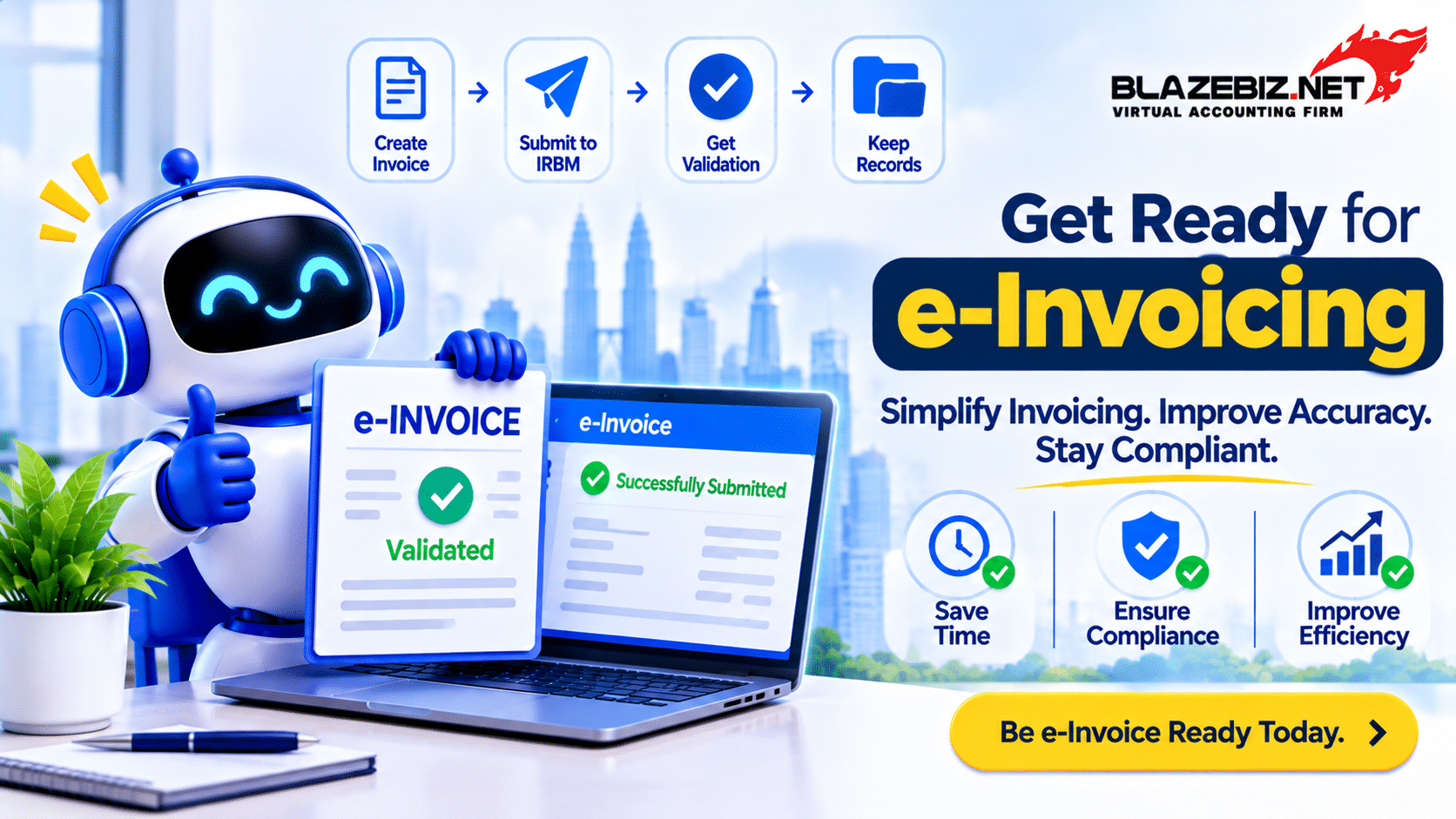
Digital transformation is changing the way businesses manage their financial operations. In Malaysia, the introduction of electronic invoicing (e-Invoice) by the Inland Revenue Board of Malaysia (LHDN) is an important step towards improving tax administration, transaction transparency and business recordkeeping.
For small and medium-sized enterprises (SMEs), understanding e-Invoice requirements is essential. Businesses need to know whether they are required to issue e-Invoices, how the MyInvois system works and what changes may be needed in their existing invoicing processes.
Although the implementation timeline and exemption rules have been updated, businesses should not assume that every SME has the same obligations. Requirements depend on annual turnover or revenue and other eligibility conditions.
This guide explains the Malaysian e-Invoice system, the current implementation position, important preparation steps and practical ways SMEs can improve their invoicing processes.
What Is e-Invoicing in Malaysia?
e-Invoicing is the process of creating and submitting invoice information electronically through a system that connects businesses with LHDN for validation.
Unlike a conventional invoice sent as a PDF or printed document, an e-Invoice contains structured transaction data that must follow the format and requirements established by LHDN.
Businesses can submit e-Invoices through two main methods:
- MyInvois Portal: A platform provided by LHDN where taxpayers can create, submit and manage e-Invoices.
- Application Programming Interface (API): An integration method that allows compatible business or accounting systems to communicate directly with the MyInvois system.
Once an e-Invoice is submitted and validated, it receives a unique identifier and can be shared with the buyer. This process helps establish a consistent digital record of business transactions.
Why Is Malaysia Implementing e-Invoicing?
The e-Invoice initiative is intended to modernise the country’s tax administration and encourage businesses to adopt more efficient digital processes.
For businesses, the transition can provide several operational benefits.
1. Better Transaction Records
Electronic invoicing creates structured records of business transactions. This makes it easier for businesses to organise invoice information and retrieve transaction details when needed.
2. Improved Invoicing Accuracy
Using standardised invoice fields can help businesses reduce missing information and inconsistent entries. Properly configured systems can also support checks before invoices are submitted.
3. Reduced Manual Administration
Businesses using compatible software may automate parts of the invoicing process, reducing repetitive data entry and the need to manage multiple disconnected records.
4. Improved Financial Visibility
Organised digital invoice records can help business owners review sales transactions, monitor outstanding payments and maintain more consistent financial information.
5. Stronger Digital Business Processes
Moving towards digital invoicing encourages businesses to review their existing accounting procedures, improve data management and adopt more structured financial workflows.
Malaysia e-Invoice Implementation Timeline
LHDN introduced e-Invoicing through a phased implementation based on annual turnover or revenue. The implementation timeline has been updated several times, so businesses should refer to the latest official guidance rather than rely on older announcements.
Based on the LHDN timeline updated on 30 August 2026, the implementation phases are as follows:
| Annual Turnover or Revenue | Implementation Date |
|---|---|
| More than RM100 million | 1 August 2024 |
| More than RM25 million up to RM100 million | 1 January 2025 |
| More than RM5 million up to RM25 million | 1 July 2025 |
| Up to RM5 million, subject to exemption rules | 1 January 2026 |
Important update: Effective from 30 August 2026, taxpayers with annual turnover or revenue below RM3 million are exempted from e-Invoice implementation, subject to the applicable exemption conditions. Therefore, businesses with turnover or revenue from RM3 million up to RM5 million generally remain within the implementation requirement.
The exemption is not determined by turnover alone. Certain ownership, holding company and related-company conditions may affect eligibility. Businesses should check the latest LHDN guidelines and FAQs before concluding that they are exempt.
For the latest information, refer to the official LHDN e-Invoice implementation timeline.
Who Is Exempted from e-Invoice Implementation?
Following the August 2026 update, taxpayers with annual turnover or revenue below RM3 million are generally exempted from implementing e-Invoice.
However, businesses should not assume that they qualify automatically based only on their reported turnover. LHDN’s exemption conditions include circumstances involving:
- Businesses with non-individual shareholders.
- Businesses that are subsidiaries of a holding company.
- Businesses with related companies or joint ventures that meet the specified revenue conditions.
The exact criteria and relevant definitions should be checked against the latest LHDN e-Invoice Guideline and General FAQs. Business structures can affect exemption eligibility even when the individual entity’s turnover is below RM3 million.
Businesses that qualify for exemption may still consider voluntary e-Invoice adoption where it supports their internal processes or customer requirements. They should understand the applicable rules before choosing to participate voluntarily.
How Does the MyInvois e-Invoice Process Work?
The MyInvois system provides the process through which businesses submit invoice information to LHDN for validation. Understanding the workflow helps SMEs prepare their invoicing procedures.
Step 1: Create the e-Invoice
The supplier prepares an e-Invoice containing the required transaction information. This may include supplier and buyer details, invoice information, descriptions of goods or services, quantities, prices and applicable tax details.
Step 2: Submit the e-Invoice to LHDN
The supplier submits the invoice through the MyInvois Portal or an integrated system using the supported API connection.
Step 3: LHDN Validates the e-Invoice
LHDN checks the submitted document against the applicable validation requirements. Once successfully validated, the e-Invoice receives a unique identifier and validation information.
Step 4: Share the Validated e-Invoice
The supplier shares the validated e-Invoice with the buyer. The validated document includes a QR code that can be used to check its existence and status through the MyInvois system.
Step 5: Manage Rejections or Cancellations
If an invoice contains an error, the supplier or buyer may take the appropriate action through the system, subject to the applicable rules and time limits. For example, the standard cancellation or rejection process has a 72-hour period from validation. After that period, adjustments generally require the appropriate new document, such as a credit note, debit note or refund note e-Invoice.
Businesses should establish a review process before submission to reduce the need for corrections.
What Information Is Required in an e-Invoice?
Accurate information is essential when preparing an e-Invoice. Missing or incorrect details may cause validation issues or require subsequent corrections.
Depending on the transaction and applicable document type, businesses may need to prepare the following information:
- Supplier information: Business name, identification details, Tax Identification Number (TIN) and relevant registration information.
- Buyer information: Buyer name, identification details and other required information based on the transaction.
- Invoice details: Invoice number, issue date and time, and document type.
- Product or service details: Description, quantity, unit price and classification where applicable.
- Transaction amounts: Subtotals, discounts, taxes and total amounts where relevant.
- Additional details: Payment information, references or other fields required for the particular transaction.
Not every field applies to every transaction. SMEs should refer to the current LHDN e-Invoice data requirements and ensure that their invoicing system supports the required fields.
Common e-Invoicing Challenges Faced by SMEs
Moving from conventional invoicing to a digital system can create operational challenges, especially for businesses that rely on manual processes or disconnected software.
1. Incomplete Customer Information
Businesses may not have all the required customer details when preparing invoices. Missing or incorrect identification information can create delays and additional work.
SMEs should review customer records and establish a process for collecting and updating relevant information.
2. Manual Data Entry Errors
Entering invoice details manually for every transaction increases the possibility of typing mistakes, duplicate records and incorrect amounts.
Using a suitable invoicing or accounting system can help standardise information and reduce repetitive data entry.
3. Unfamiliarity with MyInvois
Employees who have never used the MyInvois Portal may need time to understand the submission, validation and correction processes.
Businesses should provide basic training and document the steps employees need to follow when issuing and managing e-Invoices.
4. Software Compatibility Issues
Some businesses use separate systems for sales, accounting, inventory and invoicing. If these systems do not communicate effectively, employees may need to enter the same information more than once.
Before selecting software, check whether it supports the required MyInvois workflow and whether the integration is suitable for the business’s transaction volume.
5. Poor Invoice Record Management
Businesses may struggle to retrieve invoices, supporting documents and transaction details when records are stored across different locations.
A consistent digital filing process helps employees locate documents and supports more organised financial recordkeeping.
7 Practical Steps to Prepare Your SME for e-Invoicing
Whether your business is already required to issue e-Invoices or is preparing for future changes, the following steps can help improve readiness.
1. Check Your Business’s Implementation Status
Start by reviewing your annual turnover or revenue and checking the latest LHDN implementation timeline. If your business is below the exemption threshold, review the additional eligibility conditions before deciding that e-Invoice implementation is not required.
2. Review Your Taxpayer Information
Ensure that your business details and Tax Identification Number are accurate. Review the information used for invoicing and identify any missing or outdated records.
3. Organise Customer and Supplier Records
Review customer and supplier information before issuing invoices. Standardise names, identification details and contact information where required to reduce errors during invoice preparation.
4. Review Your Existing Invoicing Process
Identify how invoices are currently created, approved, issued and stored. Check whether employees use spreadsheets, accounting software or manual documents, and identify areas that may need improvement.
5. Choose a Suitable Accounting or Invoicing System
Consider software that supports your business’s invoicing requirements and can connect with the MyInvois system where needed. Review the available functions, integration method, reporting capabilities and support arrangements before making a decision.
6. Train Employees
Employees responsible for sales, accounts and administration should understand the invoicing workflow. Provide guidance on preparing invoices, checking information, submitting documents and handling rejected or cancelled transactions.
7. Establish a Regular Review Process
Review invoice records regularly to identify missing submissions, duplicate documents, incorrect information and unresolved validation issues. Assign clear responsibility for monitoring the process.
MyInvois Portal vs API Integration: Which Should SMEs Use?
Businesses can use the MyInvois Portal or an API integration to submit e-Invoices. The appropriate option depends on the size of the business, transaction volume and existing software environment.
| Area | MyInvois Portal | API Integration |
|---|---|---|
| Access | Through the online portal | Through compatible business software |
| Invoice preparation | Manual portal-based entry or available portal functions | Prepared through an integrated system |
| Automation | Generally requires more manual handling | Can automate supported submission workflows |
| Suitable for | Businesses with simpler invoicing needs | Businesses with suitable systems and higher transaction volumes |
| Setup | Portal access and user preparation | System configuration, integration and testing |
The MyInvois Portal may be sufficient for businesses with relatively straightforward invoicing requirements. Businesses processing larger volumes may benefit from API integration if their software supports it.
SMEs should compare the total cost, ease of use, training requirements and ongoing support before selecting an approach. An automated solution is only useful when it fits the business’s actual workflow.
How e-Invoicing Can Improve Financial Management
e-Invoicing is not only a tax-related process. When implemented properly, it can also encourage businesses to improve the way they manage financial information.
More Organised Sales Records
Structured invoice information can make it easier to review sales transactions and locate supporting documents when required.
Better Accounts Receivable Monitoring
When invoice records are maintained consistently, businesses can more easily identify outstanding customer balances and follow up on overdue payments. However, e-Invoice validation itself does not confirm that a customer has paid.
Improved Financial Reporting
When invoicing information is properly connected with accounting records, businesses can improve the consistency of their sales reporting and financial information.
More Efficient Administration
Reducing repeated data entry and organising invoice records can help finance teams spend less time on routine administration and more time reviewing business performance.
e-Invoicing Readiness Checklist for Malaysian SMEs
Use this checklist to review your business’s readiness and identify areas that need attention.
- Check the latest LHDN implementation timeline.
- Review annual turnover or revenue against the applicable threshold.
- Confirm whether the business qualifies for any exemption.
- Review business registration and taxpayer information.
- Check supplier and customer details.
- Review existing invoice formats and processes.
- Identify whether the MyInvois Portal or API integration is more suitable.
- Check accounting software compatibility.
- Train employees involved in invoicing and accounting.
- Establish procedures for rejected, cancelled and adjusted invoices.
- Maintain organised digital invoice records.
- Review the latest LHDN guidelines and FAQs regularly.
How BlazeBiz Can Support Better Financial Management
Managing e-Invoicing effectively requires accurate financial records, organised invoicing processes and reliable accounting information. Businesses should choose software that supports their operational requirements and helps reduce unnecessary manual work.
BlazeBiz provides business software solutions designed to support accounting and financial management. By improving how financial information is recorded and organised, SMEs can build more consistent business processes and make better-informed decisions.
Before adopting any invoicing solution, businesses should confirm its current MyInvois compatibility and the specific functions available under their chosen package.
Visit BlazeBiz to explore business software and accounting solutions for your organisation.
Frequently Asked Questions About e-Invoicing in Malaysia
1. What is e-Invoicing in Malaysia?
e-Invoicing is a digital invoicing process in which structured invoice information is submitted to LHDN through the MyInvois Portal or an integrated system for validation. A validated e-Invoice receives a unique identifier and can be shared with the buyer.
2. What is the current e-Invoice exemption threshold in Malaysia?
Following the LHDN update on 30 August 2026, taxpayers with annual turnover or revenue below RM3 million are generally exempted from e-Invoice implementation, subject to the applicable exemption conditions. Businesses should check the latest LHDN guidance to confirm eligibility.
3. Do Malaysian SMEs need to use the MyInvois Portal?
Businesses required to implement e-Invoice can use the MyInvois Portal or a suitable system integrated through the supported API. The appropriate method depends on the business’s invoicing requirements and software capabilities.
4. Is a PDF invoice considered an e-Invoice?
A conventional PDF invoice is not automatically an LHDN-validated e-Invoice. An e-Invoice must follow the required structured data format and be submitted through the applicable MyInvois process for validation.
5. What happens if an e-Invoice contains incorrect information?
Errors should be handled using the applicable rejection, cancellation or adjustment process. The standard cancellation or rejection period is 72 hours from validation. After this period, the appropriate adjustment document may be required instead of cancellation.
6. Can small businesses voluntarily adopt e-Invoicing?
Businesses that qualify for an exemption may consider voluntary participation where it benefits their operations or meets customer requirements. They should refer to the current LHDN guidelines for the applicable conditions and procedures.
7. Does e-Invoice replace accounting software?
No. e-Invoicing is part of the invoicing and tax reporting process. Accounting software continues to support other activities such as expense recording, bank reconciliation, financial reporting and accounts management.
Conclusion
e-Invoicing is an important development in Malaysia’s digital business environment. For SMEs, understanding the implementation timeline, exemption conditions and MyInvois process is essential for managing invoicing responsibilities effectively.
Businesses can prepare by reviewing their taxpayer information, organising customer records, improving invoice procedures and selecting suitable accounting or invoicing software. These steps can help reduce errors and make financial administration more efficient.
Most importantly, SMEs should keep up with the latest LHDN announcements and guidelines because implementation requirements may change. A well-organised invoicing process can help businesses stay prepared while building stronger financial management practices.
